


Living in the Light: Brother Richard MacPhee, OH
Date posted on March 24, 2026
Living in the Light highlights the people and ministries that make up the Diocese of Hamilton.
Through their stories, history, and mission, we see how faith is lived out every day in our diocesan community.
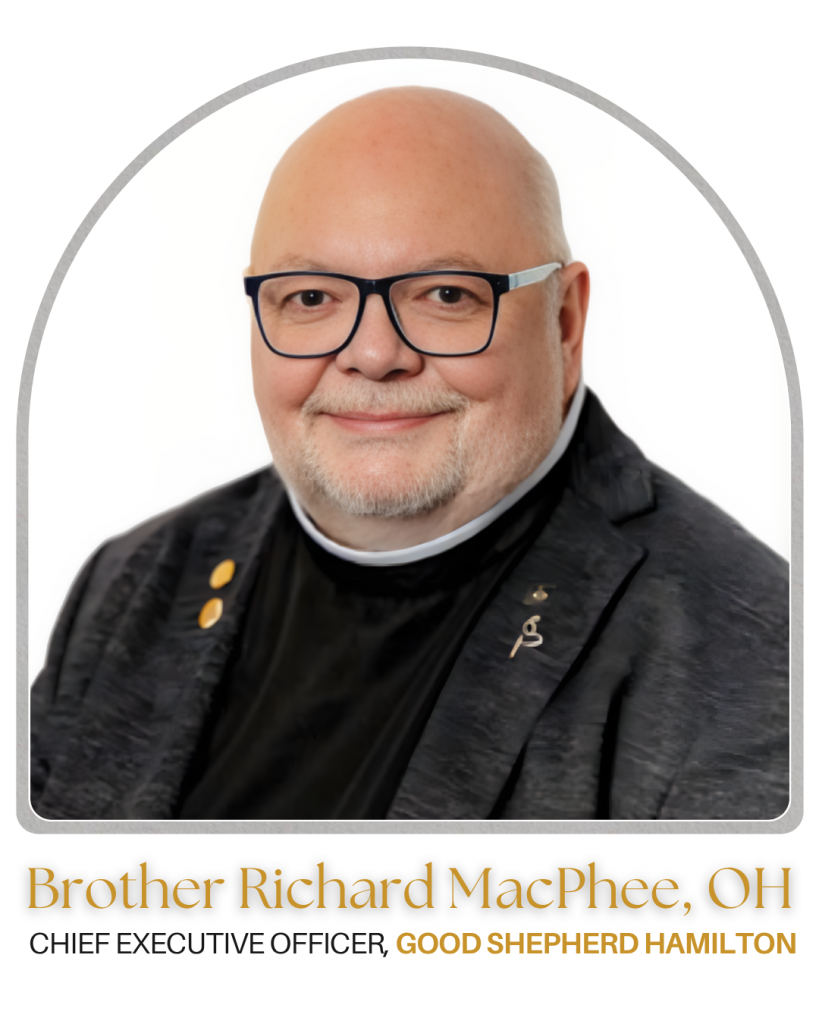
Brother Richard MacPhee, O.H., Chief Executive Officer of Good Shepherd Centres and Good Shepherd Non-Profit Homes in Hamilton, has spent his life walking alongside people who often find themselves on the margins. His path to religious life was not a straight one, but it grew out of years of service, personal encounters, and a desire to serve those in need.
As a high school student, he volunteered both locally and internationally, including time spent in Tanzania helping to build a primary school and improve access to clean water. It was there that a moment stayed with him: a man approached and said simply, “I’m poor, give me your shirt.” Reflecting on it later, Brother Richard found himself questioning who defines poverty, and how easily dignity can be taken from people. The experience planted a call to work with the poor — one he would later come to understand as rooted in North America.
After university, Brother Richard became a registered nurse, a profession that proved deeply formative. As he explains, “I think the nursing degree helped me to understand the human person, to care for and journey with people in so many different aspects of their lives.” He later completed a master’s degree in health administration, which has supported his leadership at Good Shepherd by allowing him to “blend the role of social services and healthcare in providing a holistic approach to care for the people we serve.”
In 1980, Brother Richard entered religious life with the Little Brothers of the Good Shepherd. That congregation has since merged with the Hospitaller Order of Saint John of God, an order founded in 1557 in Granada, Spain.
The Good Shepherd: Mission and Ministry
The Brothers of Saint John of God operate approximately 450 centres in more than 50 countries, providing services that range from homeless shelters and psychiatric care to hospitals, developmental services, and community clinics. At Good Shepherd in Hamilton, Brother Richard works alongside three other Brothers and nearly 800 staff members, serving men, women, and children in need.
Originally founded as a shelter for homeless men, Good Shepherd has expanded over the years to include shelters for women and children, youth shelters, services for women fleeing domestic violence, supportive housing for people living with serious mental health challenges, and programs for refugees and asylum seekers. Today, about 1,600 households are supported through these services, including 154 households at Good Shepherd Square.
Their work is guided by a simple yet demanding motto: Never Stop Loving.
As a Brother of Saint John of God, Brother Richard has taken the traditional vows of poverty, chastity, and obedience, as well as a fourth vow: hospitality — a central focus of the work at Good Shepherd. According to Brother Richard, “Our mission here at Good Shepherd is hospitality, but it’s expressed through ‘Never Stop Loving’ and through our availability, adaptability, flexibility, responsibility and our sense of quality care.” Considerable effort is made to ensure that staff understand and embody this mission. A full week each year is dedicated solely to mission, ensuring that everyone understands why the work is done and whom it serves.
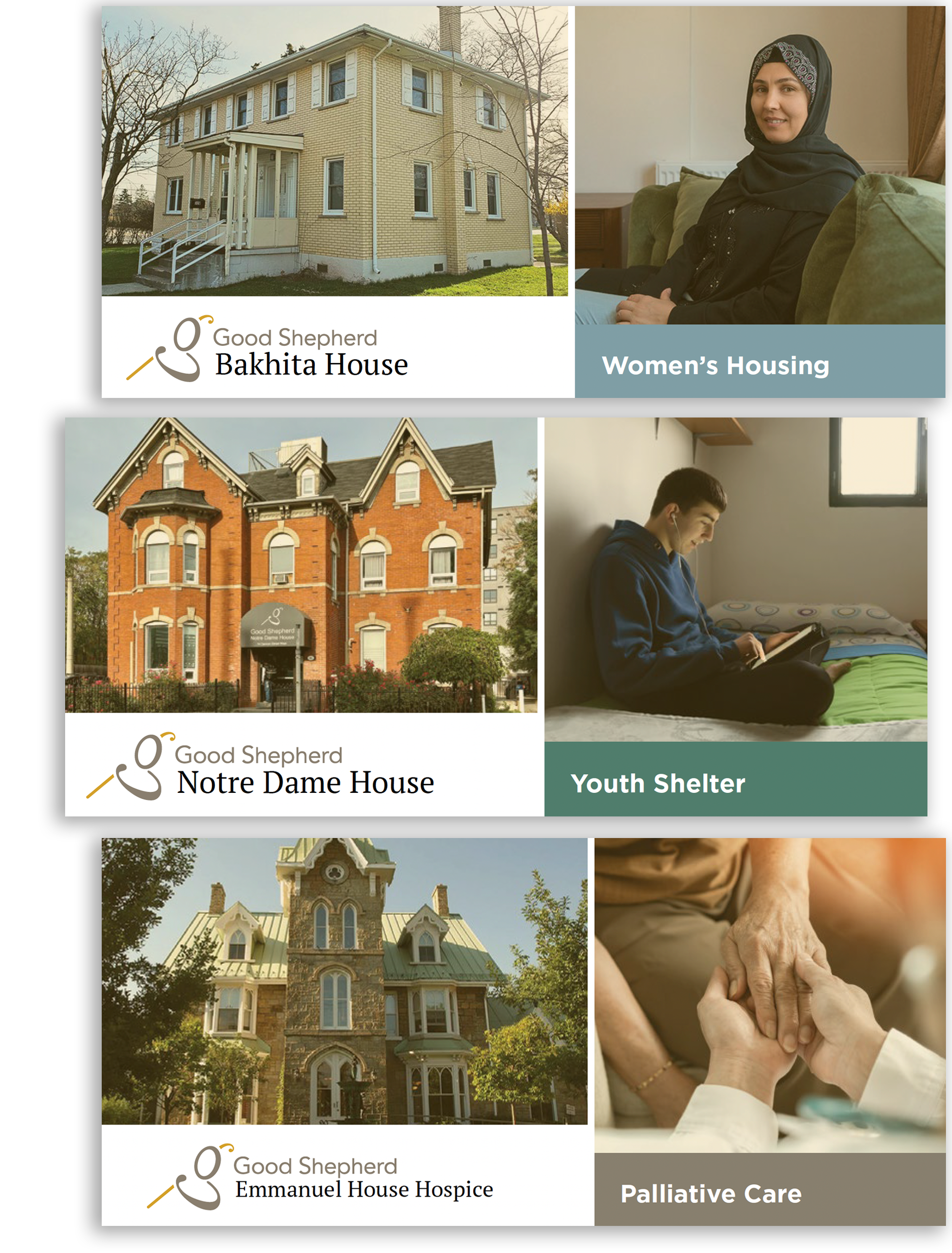
Photos from Good Shepherd
Leadership Rooted in Response
Brother Richard describes his day-to-day role as being a “butcher, baker, and candlestick maker.” His responsibilities can range from meeting with donors and funders, to working through service delivery challenges, to advocating for people whose voices are often unheard. Some days are filled with administrative decisions; others might involve sitting beside someone who is dying, or listening to someone experiencing a psychotic episode and helping them find care and support.
“It’s often a role of advocacy for people. So often the poor are not given a voice, and part of what we do here is help people find their voice.”
Brother Richard McPhee, OH
Advocacy is central to his work. Good Shepherd works to make sure the voices of those they serve are heard at decision-making tables, especially when it comes to housing, healthcare, and social policy.
That responsiveness has led to new and practical initiatives, including the opening of a small home in Stoney Creek for women who are asylum seekers and refugees; a group that does not fit within the traditional shelter system. More recently, Good Shepherd responded to the needs of people living in encampments by developing approximately 80 tiny homes for individuals and couples, including those with pets, who were unable to access standard shelters.
Hope for the Church and the Community
When asked how people in the community can help break down barriers for those in need, Brother Richard encourages simple, practical acts of kindness. He invites people to “figure out a way that you might make a difference — from buying somebody a cup of coffee, to coming to Good Shepherd and serving a meal, working in our food bank, or donating to support an organization like ourselves.”
Looking ahead, his hope for Good Shepherd, the Church, and the diocesan community is that they will continue to respond faithfully and creatively to the needs of the poor, while staying grounded in their mission.
“My hope is that our Church will continue to be a prophetic voice for the poor. It is an important part of the teachings of Jesus Christ — to love thy neighbour as thyself.”
Brother Richard McPhee, OH
When asked what he would say to someone discerning a call to religious life or to service among the poor and the vulnerable, Brother Richard points to the words of St. John of God: “Do good for yourself by doing good for others.” It is a simple invitation that continues to shape his own vocation and the mission of Good Shepherd today.