


Diocesan Policy Regarding the Disposition of Cremated Remains
Dear Brothers and Sisters in Christ,
The death of a loved one is always a moment of deep sorrow, but also a moment when the faith of the Church shines with particular clarity. As Christians, we believe that life does not end in death. Through the death and resurrection of Jesus Christ, the Lord has opened for us the path to eternal life. As the Church proclaims in the Order of Christian Funerals (OCF), Christ accomplished the redemption of humanity, “by the Paschal Mystery of his blessed passion, resurrection from the dead, and glorious ascension” (OCF, no. 1).
Because of this hope in the resurrection, the Church has always treated the human body with great reverence. Saint Paul reminds us: “Or do you not know that your body is a temple of the Holy Spirit within you, which you have from God, and that you are not your own?” (1 Cor 6:19). In Baptism, the body becomes a temple of the Holy Spirit and is nourished throughout life by the sacraments, especially the Eucharist. For this reason, even after death, the body of the faithful departed—or its cremated remains—is treated with dignity and respect as we await the resurrection promised by the Lord.
In our own time, cremation has become increasingly common in our society. The Catholic Church permits cremation, provided that the choice is not made in denial of the Christian belief in the resurrection of the body: “For the final disposition of the body, it is the ancient Christian custom to bury or entomb the bodies of the dead; cremation is permitted, unless it is evident that cremation was chosen for anti-Christian motives” (OCF, no. 19). At the same time, the Church continues to encourage the burial of the body whenever possible, following the example of Christ, who himself was laid in the tomb after his death, and echoing the biblical tradition seen in Abraham’s purchase of a burial place (cf. Gen 23) and Jacob’s burial instructions (cf. Gen 49).
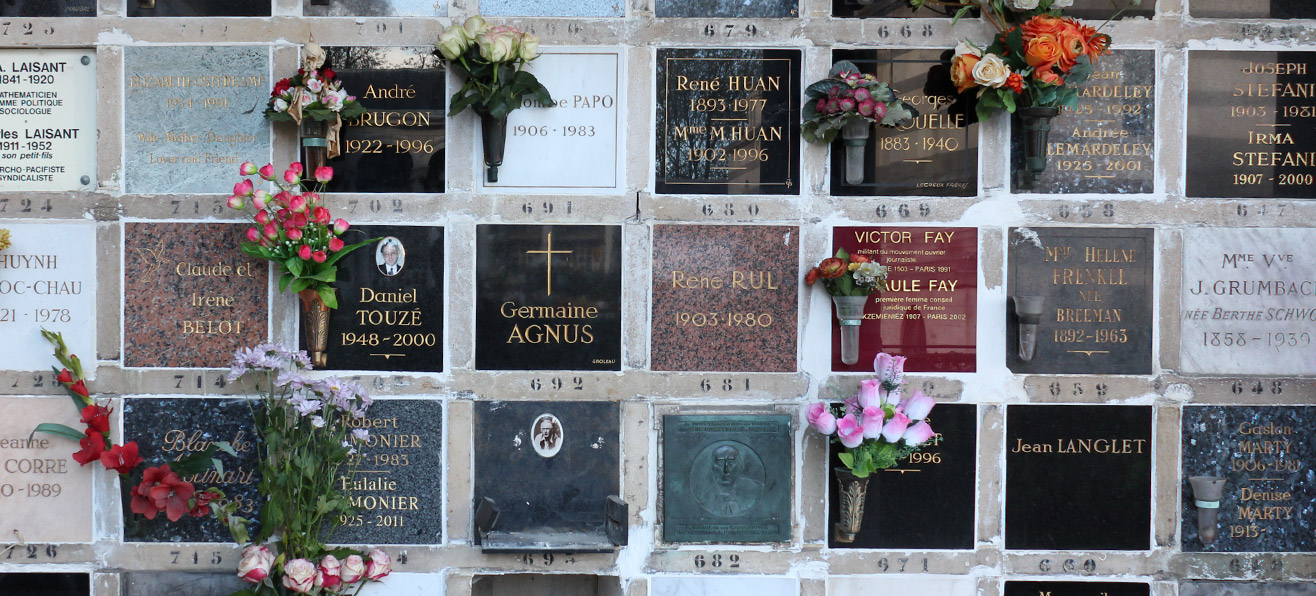
When cremation is chosen, the Church asks that the cremated remains be treated with the same reverence as the body of the deceased. The ashes should be placed in a worthy vessel and laid to rest in a sacred place such as a cemetery, mausoleum, or columbarium—as provided in the Rite of Committal for the burial of ashes (OCF, Supplement for Celebrations with Cremated Remains, no. 627). Scattering ashes, keeping them at home, dividing them, or placing them in jewellery is not permitted since such practices do not reflect the respect owed to the human body. For this reason, when a form of disposition is chosen that does not reflect the Church’s teaching, the Church is unable to offer the prayers of the committal rite, trusting instead in God’s mercy as we continue to accompany the family with compassion and care (OCF, Supplement for Celebrations with Cremated Remains, no. 628).
A Catholic cemetery or other sacred place of burial is more than simply a resting place for the dead. It is a place of prayer and hope, a visible sign of our communion with those who have gone before us marked with the sign of faith. There we entrust our loved ones to God’s mercy and await the day when the Lord will raise them to new life.
I encourage the faithful of our Diocese to become familiar with the Church’s teaching on these matters and, when possible, to discuss funeral and burial wishes with their families. Doing so can help ensure that, even in moments of grief, our choices reflect the faith we profess.
The Church accompanies all who mourn with compassion and prayer. May the Lord who conquered death grant eternal rest to the faithful departed and comfort to all who grieve.
Entrusting our deceased loved ones to the mercy of God, and invoking the intercession of Saint Joseph, patron of a happy death, I remain
Sincerely yours in Christ,
+ Joseph Dabrowski
Bishop of Hamilton
19 March 2026
Solemnity of Saint Joseph
The following resources offer valuable guidance on the Catholic Church’s teachings regarding funerals, burial, cremation, and the grieving process, helping families, pastoral ministers, and funeral service professionals better understand the Church’s beliefs and pastoral care surrounding death.
Burying the Dead, Grieving Well (2022) – A pastoral guide reflecting on bodily disposition and grief. This is not a new ritual, but a pastoral teaching document. (CCCB)
Liturgical Resource Materials on Funerals, including the 2019 update of Cremation and Funeral Liturgies. (CCCB)